.svg)
.svg)





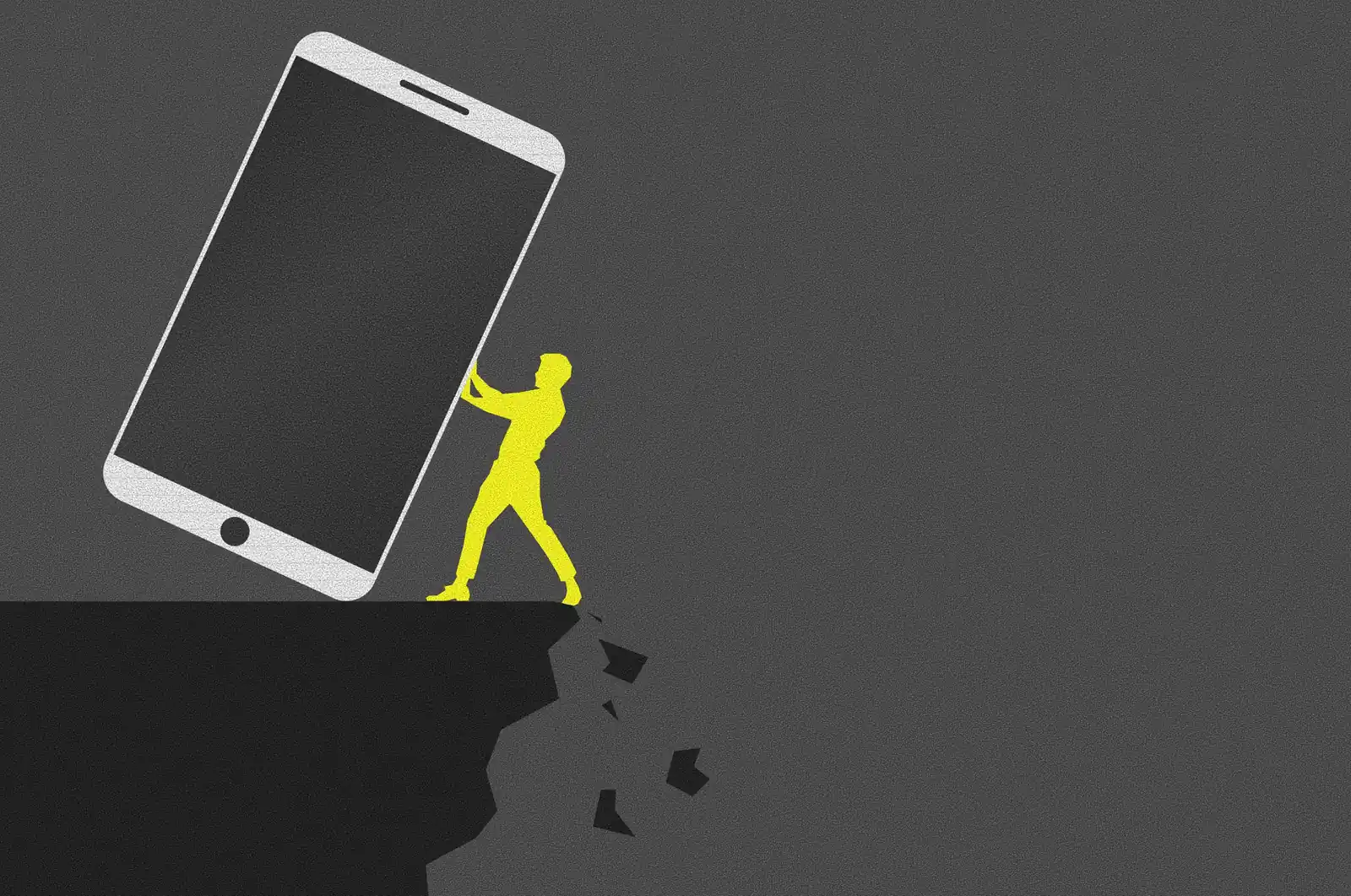
A Note on Context and Purpose: The following article is a systemic analysis of human psychology, modern socioeconomic pressures, and neurobiology. It is intended for educational purposes only and does not constitute medical advice. For personalised medical guidance, always consult with your own qualified healthcare professional or psychiatrist.
When Abraham Maslow introduced his Hierarchy of Needs in 1943, he presented a profoundly logical blueprint for human fulfilment. The concept was elegant: a pyramid where foundational human needs: food, shelter, safety, and reproduction—must be securely established before an individual can ascend to higher cognitive realms like love, esteem, and self-actualisation.
For decades, this pyramid served as the bedrock of psychological theory. But Maslow formulated it during an industrial economy. The milestones of adulthood were highly linear then. Today? That linear trajectory has been obliterated.
We have to remember a hard truth: human biology and neurology are products of a profound evolutionary timeline. This development took hundreds of thousands of years, has been rigorously tested by time, and cannot simply be bypassed or upgraded overnight. We are currently navigating a hyper-accelerated digital world using hunter-gatherer neurological hardware.
In our consulting rooms, we see a systemic crisis born of this exact mismatch. Modern adults are desperately attempting to reach the pinnacle of self-actualisation while the base of their pyramid fractures beneath them. To understand this crisis—particularly how it intersects with neurodivergent conditions like ADHD—we need to rewrite Maslow’s Hierarchy for the modern era.
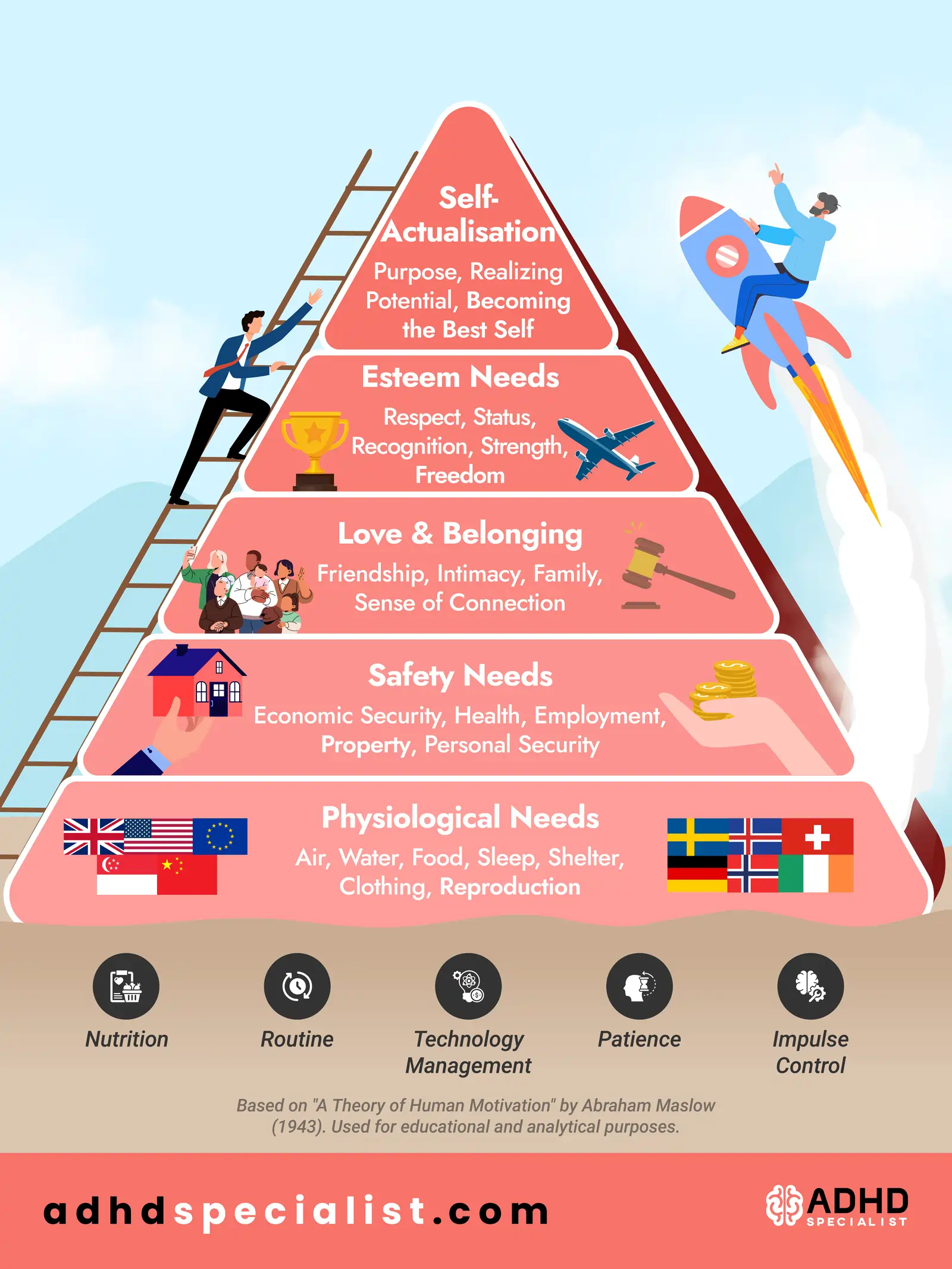
Level 1: The Biological Clock vs. The Cost of Living
For previous generations, achieving basic stability and starting a family was a relatively seamless transition. Today, the "setup phase" of adulthood has morphed into an exhausting, decades-long marathon shaped by a punishing cost of living crisis.
This delay has birthed a silent mental health crisis regarding reproduction. For high-achieving adults, starting a family is frequently a heavily delayed, highly medicalised project. We observe this clinically as The Executive Timeline Trap.
This trap happens when a professional subconsciously applies the negotiable rules of their career to the non-negotiable realities of human biology. In the corporate world, if a project falls behind, you leverage your intellect to negotiate an extension. You simply outwork the problem.
Driven by intense cognitive demands, many adults deplete their entire executive functioning bandwidth at the office. They defer their personal lives, assuming they will apply their usual hyper-focus to fertility when their "financial fortress" is secure. But biology does not grant extensions. The psychological burden of realising the biological clock has ticked past optimal windows while one was busy acquiring capital is immense.

Level 2: The 10x Multiplier and The Algorithmic Threat
Historically, a steady job provided guaranteed security. A home could be purchased on a single income for two to three times an average salary.
The mathematics of safety have been entirely rewritten. In major economic hubs, property prices have surged to a 10x multiplier of average salaries. The basic safety net of homeownership now requires decades of dual-income leverage. Mortgages stretch up to 40 years, effectively tying individuals to high-stress employment out of sheer necessity. Over time, the stress of sustaining this financial leverage frequently triggers ADHD overspending and impulsivity as a coping mechanism, further destabilising the foundation.
At the same time, employment security is eroding. With the rapid integration of advanced algorithms into the knowledge economy, the psychological safety of being an "expert" is vanishing. When your housing requires a four-decade financial commitment, but your industry cannot guarantee its own existence for the next five years, the "Safety" tier of Maslow's pyramid becomes a zone of perpetual economic insecurity.
But the algorithmic threat does not stop at economic displacement; it actively assaults our psychological safety. We are living in digital environments engineered to exploit human vulnerability for profit. As interdisciplinary research highlights, social media algorithms are purposefully designed to push extreme, emotionally dysregulating content to maximise user engagement and generate billions in advertising revenue. This predatory extraction of attention fuels algorithmic addiction, profound anxiety, and systemic mental health crises. When the very platforms we use to navigate the world are built on business models that actively incentivise psychological disturbance, genuine "Safety"—both economic and cognitive—becomes nearly impossible to secure.

The Cognitive Hijack: AI and the Death of Critical Thinking
This technological shift introduces a completely new threat to our psychological safety—one Maslow could never have predicted. We are witnessing the systematic erosion of critical thinking.
For the last two decades, we outsourced our memory to search engines. Now, we are outsourcing our reasoning to Artificial Intelligence.
While LLMs (Large Language Models) are marketed as helpful assistants, we must view them critically. By design, these models tend not to influence the user. They are built to appease, to reflect what you want to hear, creating a frictionless but highly manipulative echo chamber. This appeasement makes us highly susceptible to suggestion. An AI can subtly drive you to spend capital on items or services you don't actually need, seamlessly integrating consumerism into its "helpful" advice.
On a macro level, these systems operate on mass data extraction, scraping the depths of human behaviour to build predictive models. In times of global tension, this same technology can be heavily weaponised to sway public opinion or destabilise realities.
For the neurodivergent mind, this is a minefield. The ADHD brain already struggles with impulsivity and dopamine regulation. Placing a hyper-personalised, non-argumentative, manipulative entity in your pocket is a profound hazard. If we lose our critical thinking, we lose our cognitive autonomy—the very core of human agency.

Levels 3 & 4: Frictionless Isolation and Algorithmic Esteem
We are inherently tribal creatures who evolved to rely on tight-knit local communities for emotional regulation. In the modern era, we traded deep, friction-heavy local relationships for frictionless, superficial digital interactions. We possess hundreds of digital connections, yet we are living through an epidemic of loneliness, making ADHD and making friends increasingly difficult for adults.
When interpersonal stress mounts without a strong local community to act as a buffer, the modern adult often falls into destructive relationship dynamics, such as those explored when individuals feel trapped in the ADHD drama triangle. Instead of resolving conflict within a physical tribe, we retreat into isolation, which inevitably affects relationships.
The goalposts for societal esteem have shifted violently as a result. Status is no longer tied to the quiet competence of one’s craft, but to the visible metric of public validation. When self-esteem becomes untethered from tangible reality and tied to a digital persona, it becomes dangerously fragile.

The Universal Basic Income Paradox: Money vs. Meaning
In response to these collapsing foundations, policymakers heavily debate Universal Basic Income (UBI)—a guaranteed financial stipend to eradicate poverty at the base of the pyramid.
While financially elegant, UBI exposes a profound psychological paradox. Humans are not merely biological machines requiring caloric and financial fuel. We are problem-solving creatures hardwired for purpose. We require the friction of endeavour.
Marie Jahoda’s Latent Deprivation Model captures this perfectly. Work provides financial survival, but it also provides crucial psychological pillars: time structure, social contact, collective purpose, and enforced activity. A comprehensive meta-analysis study validating this model confirmed that employment remains the most effective provider of these vital psychological inputs, which collectively serve as significant, independent predictors of overall mental health.
Microsimulation studies support this truth: while a liveable UBI reduces acute financial stress, population mental health actually worsens if recipients use it to leave the workforce entirely.
For the neurodivergent brain, this is a matter of critical survival. Individuals with ADHD struggle intensely to generate internal structure. A vast ocean of "free time" is a tragic gift. Without external deadlines and the forward momentum of a structured workday, executive dysfunction thrives, leading to profound dysregulation, isolation, and heavy depressive symptoms. Money alone cannot buy you the middle tiers of Maslow's pyramid. We inherently need to be needed.

Pseudo-Freedom and The Attention Mortgage
Attention is the new oil. We live inside a system designed to extract your time—a reality we break down in our analysis of managing ADHD in a trillion-dollar economy.
You might not realise it, but alongside your financial mortgage, you are paying an unseen Attention Mortgage every single day. If you spend hours a day scrolling through algorithmic feeds, caught in the loop of modern ADHD and phone addiction, you are entirely bankrupting your disposable daily attention. This "tax" on your focus robs you of the deep cognitive effort required to fix the structural issues in your life.
Driven by this deficit of bandwidth, many individuals seek "fast" or "budget" mental healthcare, assuming a quick 45-minute checklist will solve complex problems. Opting for fragmented, high-volume mental healthcare is a false economy. It creates hidden costs and the psychological whiplash of inadequate care—ultimately costing you more time, capital, and stability.

The Neurodivergent Reality: The Gravity Debt
At the peak of Maslow's model sits Self-Actualisation: the pursuit of ultimate purpose and creative potential. Today, people obsess over aggressively self-improving to force this peak while their baseline safety—their finances, sleep hygiene, and relationships—remains in complete disarray, fuelling the ADHD-sleep-burnout triangle.
This trap severely impacts adults with ADHD. While many wonder, "Could ADHD be an evolutionary advantage?", the reality is that the modern environment weaponises these specific traits. Due to a dopamine-seeking neurology, the ADHD brain is naturally drawn to the very top of the pyramid. They are brilliant, lateral thinkers who thrive on big-picture strategy.
But ADHD is defined by a deficit in executive function—the exact skillset required to manage the boring, low-dopamine logistical foundations at the bottom of the pyramid. Dealing with tax returns, complex administrative vetting, and routine maintenance is physically agonising.
Everything in the universe requires balance. In physics, biology, and psychology, equilibrium is a universal law. You cannot defy it forever. Because these individuals are floating without structural support, they accumulate immense Gravity Debt.
The universe enforces its balance, and gravity always wins. They crash into severe ADHD and career burnout, not because they lack capability, but because this debt eventually gets called in. The unsupported superstructure violently collapses back down to earth.

Rebuilding the Foundation
You cannot simply treat your way out of a fractured ecosystem. While clinical intervention is a profoundly effective tool, it must be paired with psychological support, coaching and structural lifestyle changes. If you enhance your cognitive focus but point it at a digital algorithm designed to extract it, you can become a more efficient consumer of your own distraction.
True mental health stability requires a comprehensive approach. It requires grounding yourself, paying off your Gravity Debt, and rebuilding your pyramid from the bottom up: honouring biological timelines, protecting your critical thinking from algorithmic manipulation, and building robust, analog scaffolding around your daily life.
If you recognise yourself in this modern struggle—feeling the weight of the Executive Timeline Trap, paying a heavy Attention Mortgage, or suspecting that ADHD is causing you to accumulate Gravity Debt—it is time to seek rigorous support.
At ADHD Specialist, we provide an unhurried, consultant-led medical framework designed for longevity. We look beyond the label to analyse the architecture of your entire life.
We invite you to book a private adult ADHD assessment with our Consultant Psychiatrist. Through highly personalised care, medical oversight, and executive coaching, we can help you reclaim your focus, safely return to solid ground.
It is time to stop paying the attention mortgage. Secure your foundation, and start living.
References
Maslow's hierarchy of needs - Wikipedia
The Luxury of Focus: ADHD in a Trillion-Dollar Economy
ADHD: Could It Be an Evolutionary Advantage?
The Attention Mortgage: The Hidden Costs of Fast ADHD Care
ADHD & Phone Addiction: 11 Strategies to Reclaim Your Focus
Adult ADHD & Fertility: The Executive Timeline Trap
ADHD and Making Friends: Strategies for Building Connections
Trapped in the ADHD Drama Triangle? How to Break Free
ADHD Overspending and Impulsivity: Tips for Better Finances
The ADHD-Sleep-Burnout Triangle: Understanding the Cycle
How ADHD Affects Relationships: Expert Tips for Success
Disclaimer: This blog is for educational and general information purposes only and does not constitute medical advice, diagnosis, or treatment. The content is not intended nor implied to be a substitute for professional consultation with your own doctor or qualified healthcare professional. Diagnosis and treatment should always be conducted under the supervision of a qualified medical professional. Information about mental health topics and treatments can change rapidly, and we cannot guarantee the content's currentness. For more information, you can check the Royal College of Psychiatrists (rcpsych.ac.uk).
Image Credits: Pexels.com and Shutterstock.com.






.svg)


