
London attracts bright, intense minds. It also creates a high-pressure environment where the need for "escape" is potent.
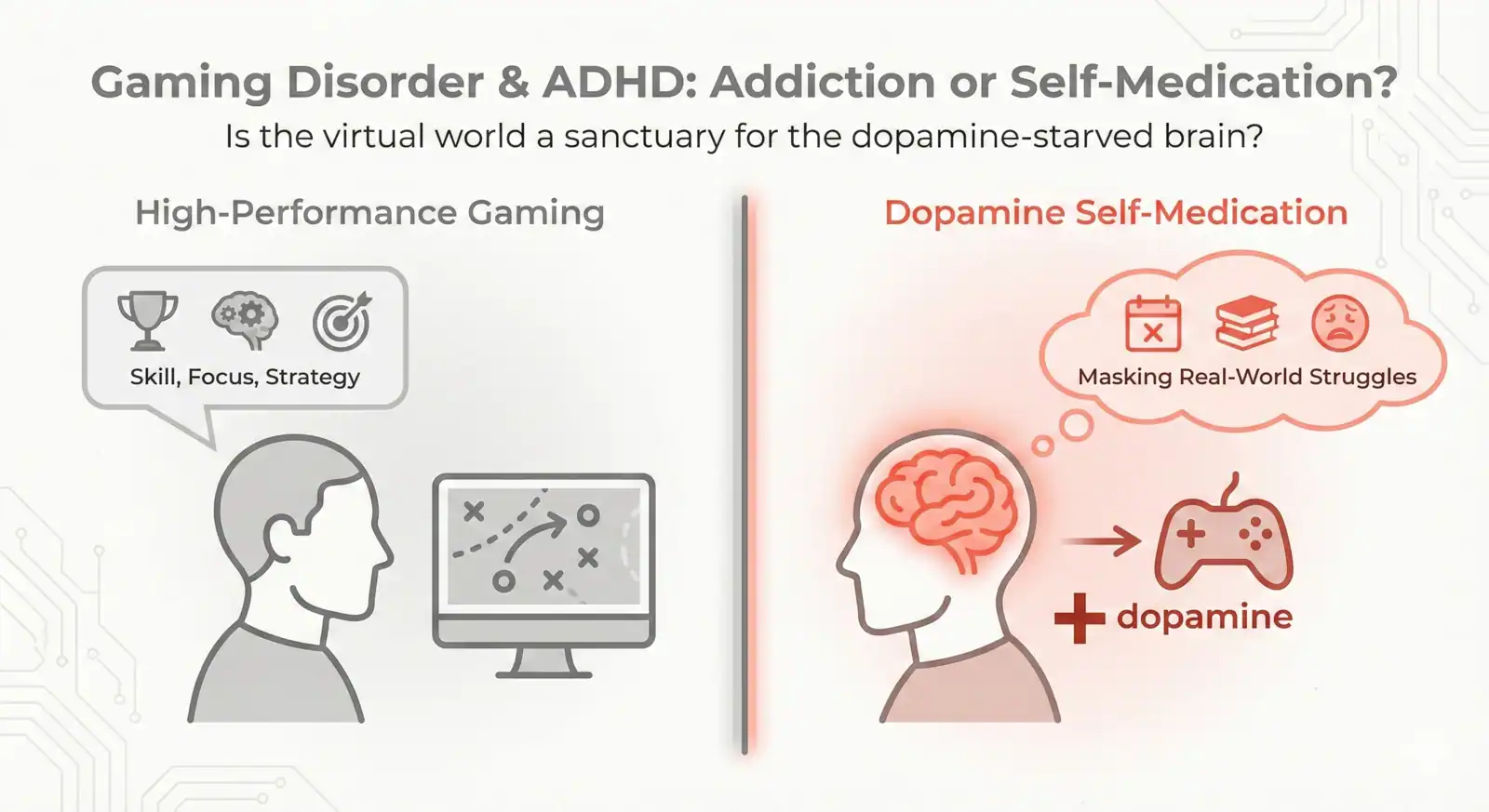
For the neurodiverse brain, the structured, high-dopamine environment of a video game offers a sanctuary from the noise of the Tube, the demands of the office, or the complexity of social dynamics.
Why the ADHD Brain Chooses the Game:
"It isn't necessarily that you are addicted to the game. It may be that you are addicted to the dopamine the game provides—which your brain is not producing naturally."
We do not view gaming as inherently negative. In fact, we recognise that for many of our patients, PC gaming is the origin of exceptional talent.
We regularly see patients whose gaming habits have fostered elite skills in coding, cybersecurity, strategic planning, and complex problem-solving.
The Clinical Threshold However, "passion" becomes "pathology" when it begins to erode your quality of life. You may need to consider a professional assessment if:
We advise all prospective patients to read about our Private ADHD Assessment Approach.
We do not aim to "ban" your computer or confiscate your console. That is a simplistic solution to a complex neurological issue. Instead, our goal during the assessment is to determine if your gaming is a primary addiction or a secondary coping mechanism.
The "Harm Reduction" Perspective We acknowledge that for some, gaming is a safety valve—a way to self-medicate that is safer than illicit substance use or high-risk behaviours often seen in London’s nightlife. However, you deserve a life where you are in control of your focus, not one where you are dependent on a server to feel normal.
If you suspect that your gaming habits are masking a deeper struggle with focus and regulation, we invite you to start the conversation.
Please submit a formal enquiry via our secure portal. This allows Dr Ivantu to review your background prior to any consultation, ensuring we are the right service to support your specific needs.
Disclaimer
This content is for educational purposes only and does not constitute medical advice. Gaming Disorder is a recognized medical condition in the UK. If you are concerned about immediate mental health risks, please consult your GP or the NHS National Centre for Gaming Disorders.


.svg)


.svg)


.svg)


